
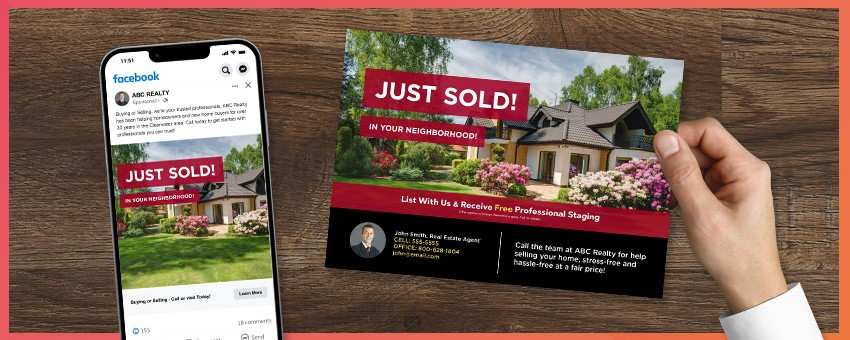
In many neighborhoods, homeowners receive dozens of marketing messages from real estate agents every year. Some arrive through social media ads, while others appear in email inboxes. Yet one method that still consistently reaches homeowners directly is real estate postcards. Because they arrive physically in a mailbox, they often capture attention in a way digital ads cannot.
For agents trying to build visibilitAgents may send real estate postcards every month featuring: Recently sold homes, Local price trends, New listingsy in a specific area, real estate postcards remain one of the most practical marketing tools. They allow agents to introduce themselves to local homeowners, highlight recently sold homes, promote listings, or offer home value reports. Unlike online ads that disappear quickly from a feed, postcards can stay on kitchen counters or refrigerators for days.
Most successful agents do not rely on only one marketing channel. Instead, they combine postcard campaigns with digital promotion through real estate ads and targeted online marketing.
Here, you’ll learn how real estate postcards work, why they still produce strong results in 2026, and how agents can combine them with modern digital strategies to generate more leads and listings.
What Real Estate Postcards Are?

Postcards are a type of direct mail marketing that agents send to homeowners or buyers within a specific geographic area. The goal is to introduce the agent, promote a property, or highlight recent neighborhood activity.
Unlike long brochures or marketing letters, postcards are designed to communicate quickly. Most recipients glance at them for only a few seconds, so the message must be clear and simple.
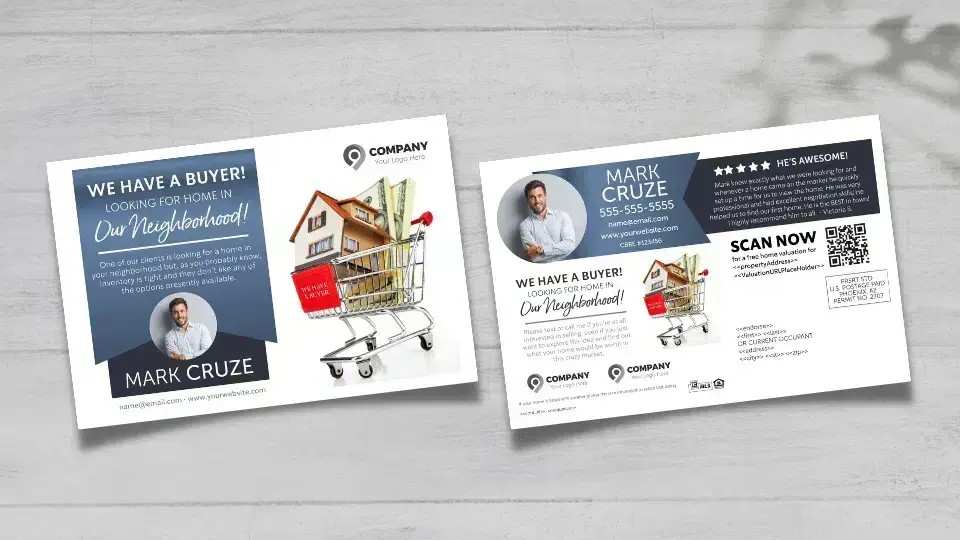
A typical postcard includes:
- A strong headline
- A photo of a property or neighborhood
- The agent’s contact information
- A short call-to-action
Because they arrive physically in a mailbox, real estate postcards often receive more attention than digital messages that can be ignored or deleted.
Industry studies suggest that the direct mail average response rate is between 2% and 5%, which is significantly higher than many forms of digital advertising.
Why Real Estate Postcards Still Work in 2026

Many people assume that traditional marketing tools are outdated. However, postcard campaigns continue to produce results for real estate professionals.
Several factors explain why they remain effective.
Physical Marketing Is More Memorable
People interact differently with physical materials than with digital ads.
According to marketing research, printed mail creates stronger memory recall compared to online advertising. When homeowners receive postcards, they may leave them on a kitchen counter or refrigerator for several days.
This extended visibility makes real estate postcards a powerful branding tool.
Local Targeting Is Very Precise
One of the biggest advantages of direct mail is geographic targeting.
Agents can send postcards to:
- Homeowners within a few blocks of a new listing
- Neighborhoods with high turnover rates
- Communities where home values are rising
Because the audience is so specific, real estate postcards often produce higher-quality leads than broad marketing campaigns.
Less Competition in the Mailbox
Online marketing spaces are crowded. Social media feeds, email inboxes, and search results all contain heavy advertising.
In contrast, fewer businesses rely on direct mail today. That means postcards often stand out more clearly.
How Real Estate Ads Support Real Estate Postcards Campaigns

While postcards are effective for reaching homeowners, digital marketing helps agents connect with buyers actively searching for properties.
Modern real estate ads appear on several online platforms:
- Google search results
- Facebook and Instagram
- Real estate websites
- Video platforms like YouTube
Modern real estate ads appear on several online platforms, including search engines, social media, and major real estate websites, each offering different advantages depending on your marketing strategy.
These campaigns allow agents to target people based on location, interests, and online behavior.
For example, an agent can show real estate ads to users who recently searched for homes in a specific city.
Performance Data From Digital Ads
Digital advertising offers the advantage of measurable results.
Typical performance benchmarks include:
- Click-through rates between 2% and 4%
- Cost per lead ranges from $10 to $60, depending on location
- Conversion rates around 1% to 3%
By monitoring these numbers, agents can improve the effectiveness of their marketing campaigns.
Digital Ads That Work Well With Real Estate Postcards
Real estate professionals use many different types of marketing campaigns depending on their goals.
Some real estate ads focus on attracting buyers, while others focus on generating seller leads.
Property Listing Ads
Property listing ads often perform better when sellers complete a thorough home walkthrough before professional photography and showings.
These ads highlight a specific property.
They usually include:
- Listing photos
- Pricing information
- Location details
- A link to schedule a showing
Property listing campaigns are among the most common ads for real estate used by agents, especially after a property is prepared to list on MLS for maximum exposure.
Seller Lead Ads
Many homeowners requesting a valuation are also wondering about the best time to sell a house, making seasonal market education an effective part of seller-focused marketing campaigns.
Another popular marketing approach focuses on attracting homeowners who may want to sell.
These campaigns often offer:
- Free home valuations are typically supported by a comparative market analysis (CMA), helping homeowners understand a realistic asking price before listing
- Neighborhood market reports built from local sales data help homeowners understand pricing trends before deciding whether to list their property
- Seller guides
Many agents use the real estate ads to build long-term relationships with homeowners.
Brand Awareness Ads Supporting Real Estate Postcards
Some marketing campaigns focus on building recognition rather than promoting a specific property.
These campaigns introduce the agent to a neighborhood and establish credibility. Over time, consistent branding helps homeowners remember the agent when they decide to sell.
Examples of Successful Real Estate Marketing Campaigns

Many successful agents combine several marketing tools to maximize exposure.
Neighborhood Farming Campaigns
A farming campaign focuses on a single neighborhood over a long period.
Agents may send real estate postcards every month featuring:
- Recently sold homes
- Local price trends
- New listings
Marketing experts estimate that consistent farming campaigns often require 6 to 12 months before generating strong results.
Multi-Channel Listing Promotion
When launching a new listing, agents often combine offline and online marketing.
A typical strategy might include:
- Sending postcards to nearby homeowners
- Running real estate ads targeting buyers in the area
- Promoting the listing on social media
This combination increases visibility and improves lead generation.
How to Design Effective Postcards

Design plays a critical role in the success of postcard marketing.
Use Clear and Simple Messaging
Postcards have limited space, so the message must be easy to understand.
Focus on one main idea, such as:
- A new listing announcement
- A recent home sale
- An invitation for a free home valuation
Clear messaging improves the effectiveness of real estate postcards.
Use High-Quality Images
Real estate marketing depends heavily on visuals.
Professional photography makes postcards more appealing and increases engagement.
Strong designs typically include:
- Clean layouts
- Professional images
- Readable fonts
Add a Strong Call to Action
Every postcard should encourage readers to take the next step.
Examples include:
- “Call today for your home’s market value.”
- “Visit our website for new listings.”
- “Schedule a free consultation.”
How to Combine Postcards With Digital Ads
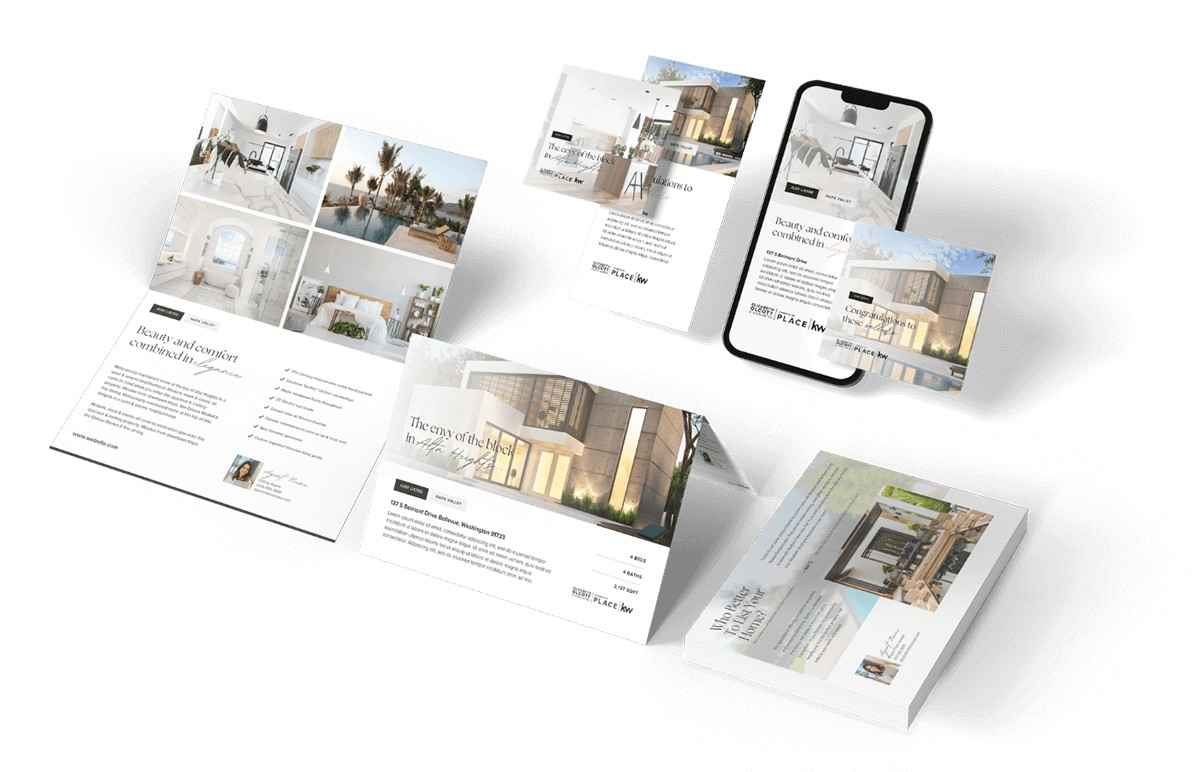
The most effective marketing strategies combine offline and online channels.
For example, an agent might send real estate postcards to homeowners and run real estate ads targeting the same neighborhood online.
This approach increases brand recognition because homeowners may see both the postcard and the digital ad.
Example Integrated Campaign
A simple marketing strategy might include:
- Sending 2,000 postcards to a neighborhood
- Running targeted ads for real estate on social media
- Sending follow-up emails to leads
Multi-channel campaigns often produce stronger results than single marketing methods.
Common Mistakes Agents Make
Even experienced agents sometimes struggle with marketing campaigns.
Here are a few common mistakes.
Inconsistent Marketing
Many agents send postcards only once or twice. However, marketing works best when repeated consistently.
Experts recommend sending postcards at least 6 to 8 times per year.
Poor Design in Real Estate Postcards
Low-quality photos or cluttered layouts reduce engagement.
Investing in professional design improves response rates significantly.
Not Tracking Results
Strong marketing performance directly influences real estate agent income, since consistent lead generation often results in more listings and closed transactions.
Agents should track:
- Response rates from postcards
- Performance of real estate ads
- Number of leads generated
Tracking data helps improve future campaigns.
Cost Comparison of Postcards vs Digital Ads
Budget planning is important when designing marketing strategies.
Postcards Campaign Costs
Typical postcard costs include:
- Design: $50–$200
- Printing: about $0.30 to $0.60 per card
- Mailing: around $0.40 to $0.55 per piece
A campaign targeting 2,000 homes may cost between $1,500 and $2,000.
Digital Advertising Costs
Online real estate ads operate on different pricing models.
Costs may include:
- Cost-per-click advertising
- Cost-per-impression campaigns
- Lead generation platforms
Digital marketing can start with smaller budgets but may require ongoing spending to maintain visibility.
How to Create a Real Estate Postcard Campaign

Launching a campaign involves several steps.
Step 1: Choose a Target Area
Select neighborhoods where you want to build recognition.
Step 2: Design the Postcard
Focus on clean visuals and a simple message.
Step 3: Print and Mail
Work with a professional mailing service.
Step 4: Track Results
Measure phone calls, website visits, and listing appointments.
These steps help agents build successful real estate postcard campaigns.
How to Write Real Estate Ad Copy?

Writing effective marketing copy is essential for digital campaigns.
When creating ads for real estate, focus on:
Highlighting Benefits
When promoting listings, agents can also educate buyers about closing costs, helping set realistic expectations before an offer is submitted.
Explain why the property or service matters to the audience.
Using Simple Language
Clear messaging performs better than complex descriptions.
Encouraging Action
Every advertisement should include a clear call to action.
How to Measure Marketing Results

Tracking results allows agents to refine their strategies.
Important metrics include:
- Postcard response rates
- Click-through rates for real estate ads
- Lead conversion rates
- Listing appointments generated
Analyzing these metrics helps identify the most effective marketing channels.
FAQ

Do real estate postcards still work today?
Yes. Many agents report response rates between 2% and 5% when campaigns are targeted and consistent.
Are real estate ads more effective than postcards?
Both methods serve different purposes. Real estate ads attract online buyers, while postcards help build local brand recognition.
What types of real estate ads generate the most leads?
Home valuation offers and listing promotions often generate strong engagement.
How often should agents send postcards?
Many successful agents send real estate postcards monthly to maintain visibility.
What marketing strategy works best for agents?
Combining postcards, digital ads, and social media marketing usually produces the best results.
Conclusion
Real estate marketing continues to evolve as technology changes how buyers and sellers search for properties. However, traditional strategies still play an important role.
Real estate postcards remain one of the most effective tools for building local recognition and reaching homeowners directly. When combined with targeted real estate ads and digital campaigns, they create a powerful multi-channel marketing system.
Agents looking to improve these marketing skills can also learn advanced prospecting and branding techniques through quality real estate books written for both new and experienced professionals.
For agents starting their marketing efforts, a practical approach includes:
- Choosing a specific neighborhood to target
- Sending consistent postcard campaigns
- Running digital ads to support the same audience
- Tracking results and adjusting strategies over time
By combining traditional and digital tools thoughtfully, agents can build stronger brand visibility and generate a steady flow of real estate leads.