
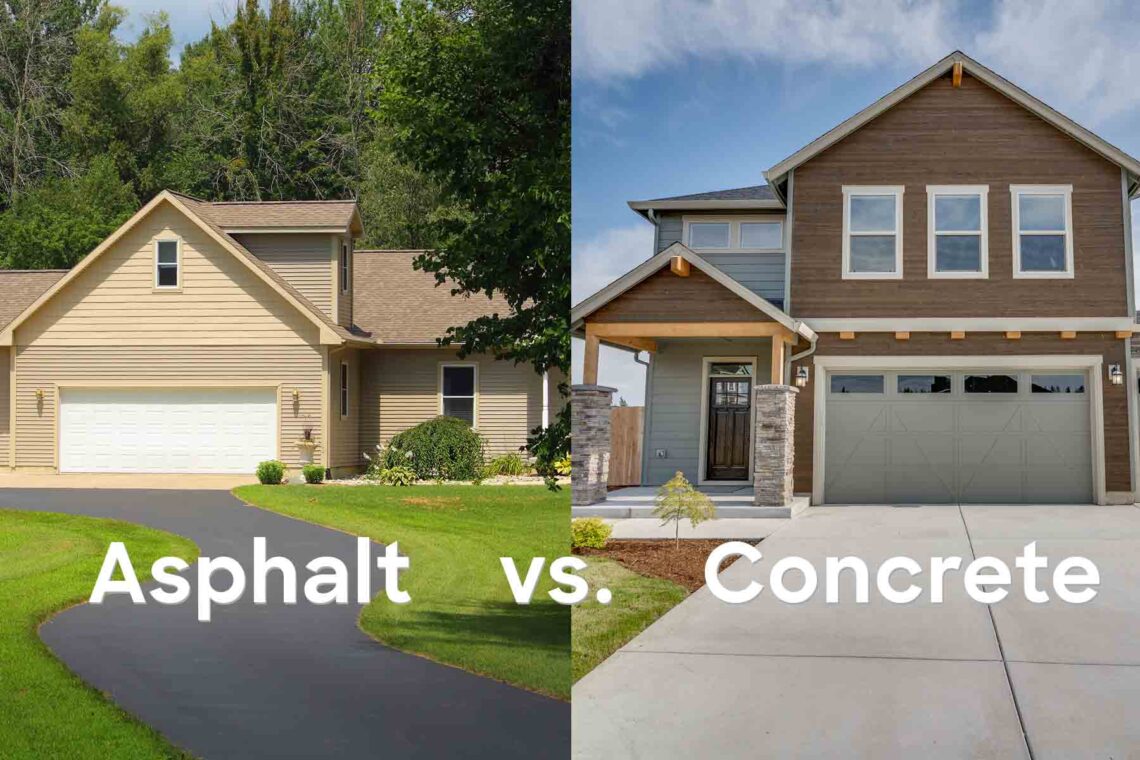
A homeowner replacing a worn driveway often faces the same question: Should they choose Asphalt vs Concrete Driveways? Imagine a house where the driveway has started cracking after 20 years. Water collects in small potholes, weeds grow through the seams, and winter snow makes the surface slippery. The homeowner decides it is time for a full replacement, but the contractor offers two options: asphalt or concrete.
At first glance, asphalt looks cheaper and faster to install. Concrete, however, promises longer durability and a cleaner appearance. Because driveway replacement is considered one of several major capital improvements, it’s worth understanding how these upgrades can affect long-term property value. Choosing between these materials requires understanding the real costs, lifespan, climate performance, and maintenance involved.
This guide explores asphalt vs concrete driveways from a practical homeowner perspective. If you’re planning multiple exterior upgrades, creating a realistic home addition budget can help prevent unexpected project costs. By understanding installation costs, long-term durability, and maintenance requirements, property owners can make a smarter decision that balances affordability and long-term value.
Understanding the Difference Between Asphalt and Concrete
Both materials are widely used for residential driveways, but they differ significantly in composition and performance.
Asphalt Driveways

Asphalt, sometimes called blacktop, is made from a mixture of crushed stone, sand, and bitumen, which is a petroleum-based binder. The dark color helps absorb heat from sunlight, which softens the material slightly during warm weather.
Key characteristics of asphalt include:
- Flexible surface
- Faster installation
- Lower initial cost
- Easier repair process
Many homeowners researching blacktop versus concrete first notice the cost difference.
Concrete Driveways

Concrete is made from cement, water, sand, and aggregate materials such as gravel. Once poured and cured, it forms a hard, durable surface capable of supporting heavy vehicles.
Common characteristics of concrete include:
- Rigid structure
- Longer lifespan
- Lighter color
- Higher installation cost
When comparing asphalt vs concrete driveway materials, these structural differences influence long-term performance.
Installation Costs: Asphalt vs Concrete Driveways

One of the first questions homeowners ask is whether asphalt is cheaper than concrete when installing a new driveway.
In most cases, asphalt does cost less upfront. Comparing today’s construction costs per square foot also provides useful context when budgeting for larger property improvements.
Asphalt Installation Costs
Typical asphalt driveway costs range between:
- $5 to $9 per square foot
For a 600-square-foot driveway, installation may cost roughly:
- $3,000 to $5,400
These prices include materials, labor, grading, and compaction. Because asphalt installation is relatively fast, contractors can often complete a residential driveway within one day.
Concrete Installation Costs
Concrete driveways typically cost more due to material and labor requirements.
Typical installation costs range between:
- $8 to $14 per square foot
A 600-square-foot driveway may cost approximately:
- $4,800 to $8,400
Decorative finishes such as stamped or colored concrete can raise costs even further.
This price difference explains why many homeowners initially lean toward asphalt when comparing asphalt vs concrete driveway options. If you’re renovating the entire exterior, it’s also helpful to compare garage and deck construction costs before setting your overall budget.
Lifespan and Durability
While asphalt may cost less initially, durability plays a major role in long-term value.
Asphalt Lifespan

A typical asphalt driveway lasts 15 to 20 years
However, proper maintenance, such as seal coating every 3–5 years, can extend its lifespan. Without maintenance, asphalt may develop cracks and potholes sooner.
Concrete Lifespan

Concrete driveways often last 30 to 40 years.
In some cases, well-maintained concrete surfaces remain intact for over 50 years. This longer lifespan is one reason homeowners choose concrete when comparing blacktop versus concrete surfaces.
Climate and Weather Performance
Climate plays a major role when evaluating asphalt vs concrete driveway performance.
Cold Climate Performance

In colder regions with freezing temperatures, asphalt often performs better. The flexible surface expands and contracts more easily when temperatures fluctuate. This flexibility helps prevent cracking during freeze-thaw cycles. Because of this advantage, asphalt is often preferred in northern states with heavy winters.
Hot Climate Performance

Concrete performs better in very hot climates. Its lighter colour reflects sunlight, helping keep the surface cooler. Asphalt absorbs heat, which can cause the surface to soften during extremely hot weather. This difference becomes noticeable in southern regions where temperatures regularly exceed 90°F.
Maintenance Requirements

Driveway materials require ongoing maintenance to preserve their appearance and structural integrity. The same principle applies to maintaining outdoor surfaces like decks, where regular cleaning helps extend their lifespan.
Asphalt Maintenance
Common maintenance tasks include:
- Seal coating every 3–5 years
- Filling cracks
- Patching potholes
Seal coating typically costs around:
- $0.20 to $0.40 per square foot
Although maintenance is required regularly, repairs are usually simple and inexpensive.
Concrete Maintenance
Concrete requires less frequent maintenance.
However, homeowners should still:
- Seal the surface every few years
- Clean oil stains
- Repair cracks early
Concrete crack repairs may cost $300 to $800, depending on severity.
When analyzing asphalt vs concrete driveway options, homeowners must consider both repair frequency and repair costs.
Repair Difficulty and Costs

Repairs represent another major difference between these materials.
Asphalt Repairs
Asphalt repairs are generally straightforward.
Contractors can often patch damaged sections or resurface the driveway.
Typical repair costs include:
- Crack filling: $100–$300
- Resurfacing: $2–$4 per square foot
Because asphalt repairs blend well with existing material, the finished result often looks uniform.
Concrete Repairs
Concrete repairs can be more complex.
When cracks develop, patching may leave visible color differences.
Some repairs require cutting out entire sections of the driveway.
For homeowners comparing blacktop versus concrete, repair simplicity often favors asphalt.
Curing Time and Installation Timeline

Another difference between materials involves curing time.
Asphalt Installation Timeline
Asphalt driveways cool and harden quickly.
Most homeowners can drive on a new asphalt driveway within:
- 24 to 48 hours
This quick turnaround makes asphalt appealing for busy households.
Concrete Installation Timeline
Concrete requires a longer curing time.
Although the surface hardens within a day or two, full curing may take:
- 7 to 28 days
During this period, heavy vehicles should avoid the driveway.
For homeowners needing quick installation, this difference influences the asphalt vs concrete driveway decision.
Property Value and Curb Appeal

Driveways contribute to a home’s exterior appearance, which can affect property value, and understanding how overall upkeep plays a role is just as important as you are helping with some repairs at home. Investing in other exterior upgrades, such as screen enclosures for patios and pools, can further improve curb appeal.
Visual Appearance
Concrete driveways often look cleaner and more modern due to their lighter color.
Decorative options such as stamped patterns can resemble stone or brick.
Asphalt, on the other hand, has a darker, more uniform look.
Real Estate Perspective
In some real estate markets, concrete driveways may slightly improve curb appeal.
However, the difference in property value is usually modest.
A well-maintained asphalt driveway still presents a clean appearance and performs well for many homeowners. Pairing it with screened porch improvements can create a more attractive and functional outdoor living space.
Long-Term Ownership Costs
Initial installation cost is only part of the financial picture.
Over 30 years, maintenance costs may shift the balance.
Asphalt Long-Term Costs
Over three decades, homeowners may need to: Reseal the surface multiple times
- Repair cracks periodically
- Possibly resurface the driveway once
These maintenance expenses gradually increase the total ownership cost.
Concrete Long-Term Costs
Concrete generally requires fewer maintenance cycles. The same focus on choosing durable materials applies when selecting mesh screens and other outdoor features that face constant weather exposure.
However, if major cracking occurs, repairs can be more expensive.
Understanding these long-term differences helps homeowners evaluate whether asphalt is cheaper than concrete over time.
How to Estimate Your Asphalt vs Concrete Driveways Budget

Homeowners can estimate driveway costs by measuring the area.
Step-by-Step Estimation
- Measure driveway length and width.
- Multiply to calculate square footage.
- Apply the average cost per square foot.
Example:
A driveway measuring 20 feet by 30 feet equals 600 square feet.
Estimated costs:
- Asphalt: $3,000–$5,400
- Concrete: $4,800–$8,400
This simple calculation helps homeowners evaluate asphalt vs concrete driveway costs before contacting contractors.
Questions to Ask a Contractor
Before starting installation, homeowners should ask contractors several important questions.
These include:
- How thick will the driveway base be?
- What materials will be used for the base layer?
- How long will installation take?
- What warranty is provided?
Asking these questions ensures homeowners receive quality workmanship. Even for smaller projects, proper home repair planning helps homeowners avoid unnecessary mistakes and expenses.
Frequently Asked Questions
Is asphalt cheaper than concrete in the long run?
Initially, asphalt costs less. However, maintenance over time may narrow the price difference compared with concrete.
How long does an asphalt driveway last?
Most asphalt driveways last 15–20 years with proper maintenance, such as seal coating.
Can Asphalt vs Concrete Driveways increase property value?
A well-maintained driveway improves curb appeal, but the difference in property value between materials is usually modest.
Which Asphalt vs Concrete Driveway material is easier to repair?
Asphalt is generally easier and cheaper to repair because patches blend with the surrounding material.
Which Asphalt vs Concrete Driveways performs better in freezing climates?
Asphalt tends to perform better in colder climates because it expands and contracts more easily during freeze-thaw cycles.
How long does concrete take to cure?
Concrete may require 7–28 days to fully cure before supporting heavy vehicles.
Conclusion
Choosing between asphalt vs concrete driveways requires balancing cost, durability, climate conditions, and long-term maintenance.
Asphalt offers lower installation costs and easier repairs, making it a practical choice for many homeowners. Concrete costs more initially but can last significantly longer and often provides a cleaner appearance.
For homeowners deciding between blacktop and concrete, the right choice depends on budget, climate, and long-term plans for the property. These considerations are equally important when evaluating patio home maintenance and exterior upkeep costs. By understanding installation costs, maintenance needs, and durability differences, homeowners can choose the driveway material that best fits their property and long-term goals.